
– By COASST Intern: Kade Smiley
COASST’s fourth most found beached bird is the Large Immature Gull (LIGU), making up 6.8% of all our beached birds. But this label is vague. What kind of gull is that exactly? And why are they large and immature as opposed to small and immature? Let’s take a look into what “Large Immature Gull” means, and why this type of bird shows up so often along our coasts.
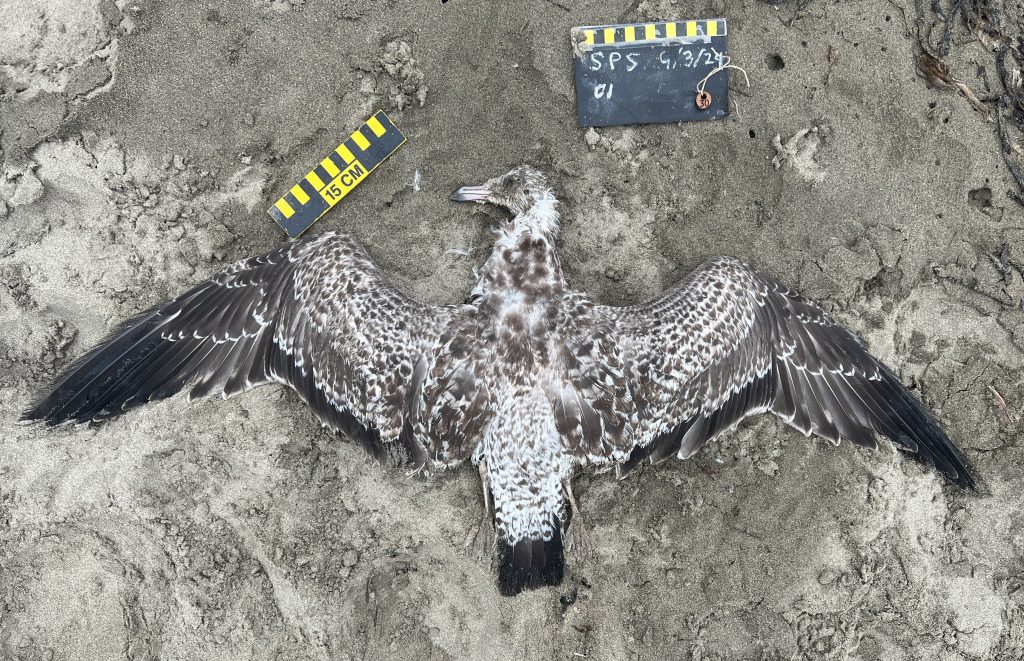
What does it mean?
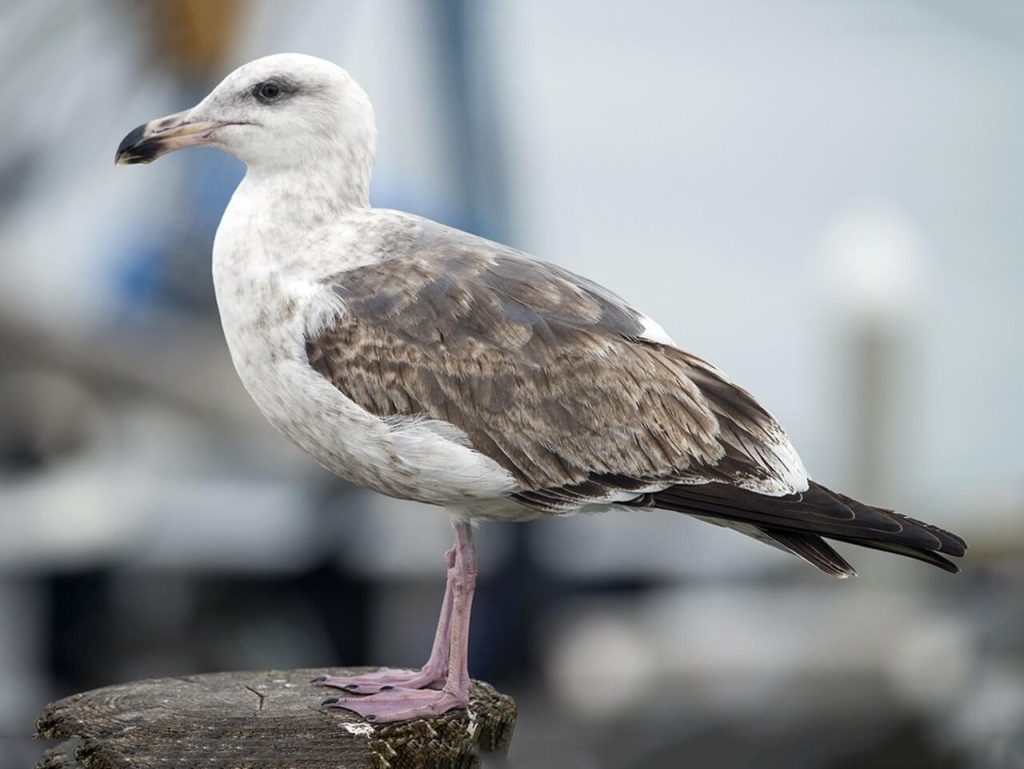
Large Immature Gull is not a single species. It’s a catch-all category used by COASST when a gull belongs to a large gull species, but doesn’t yet have adult plumage. The term “large” matters because gulls vary widely in size. This label includes young Western Gulls, Glaucous-winged Gulls, Herring Gulls, California Gulls, and their hybrids. These are all considered large gulls (they are larger than other species of gulls!), and they usually take between two and four years to fully mature. That is where the label “immature” comes in, meaning any age before adult.
During maturation, they go through several partial and complete molts (losing and regrowing their feathers) and slowly transition towards having adult feathers.
Why Do They All Look the Same?
Here’s the issue: Most large gulls hatch with nearly identical brown, speckled plumage. This mottled appearance helps camouflage them on beaches and nesting areas. Because that works well, and many of the gulls share similar environments, there has been no evolutionary pressure to cause any changes in the plumage of juvenile gulls. Add to that the fact that many large gulls are closely related, and you end up with a bunch of different species of chicks and first-year birds that all look extremely similar and are therefore difficult to tell apart!
To make things even harder, their similarities last well beyond the first few months. Large gulls molt very slowly and it can take years for them to transition into their shiny clean adult plumage. Along the way, they pass through a mixture of in-between feather stages. Their molts are messy and often overlap in time. Some feathers get replaced multiple times while others stay in the juvenile stage for over a year before getting replaced. All of this molting means a long period, sometimes two or three years, where a young gull is neither fully juvenile nor fully adult. It doesn’t end there, there are also many hybrid gulls, making ID that much more complicated!
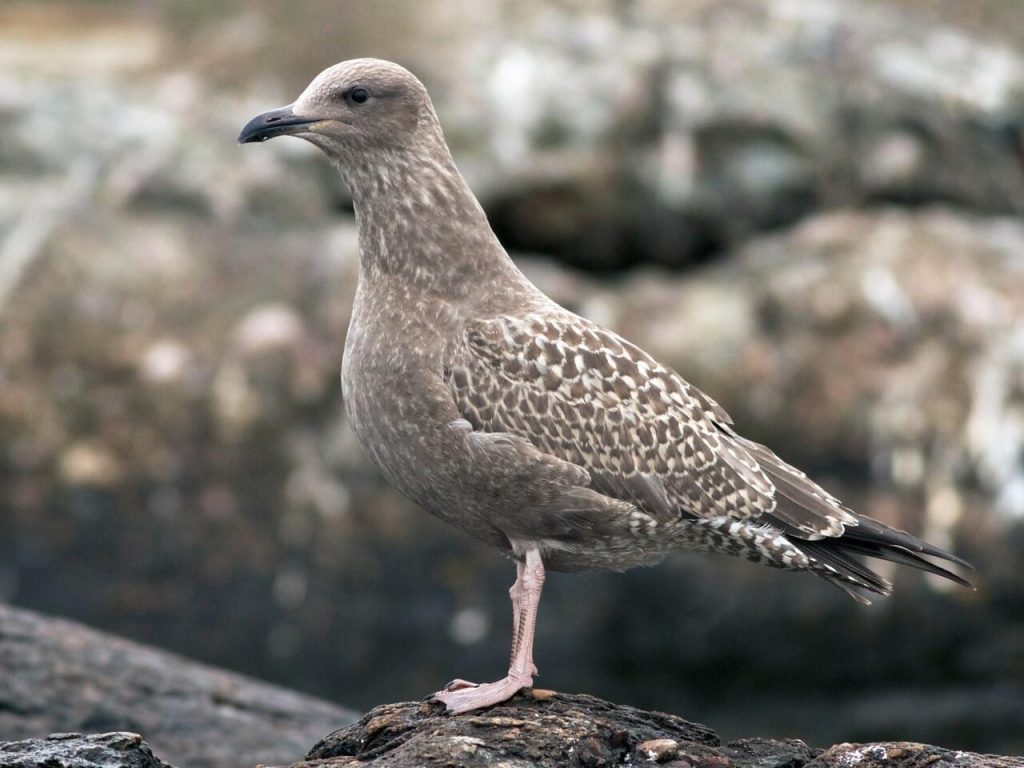
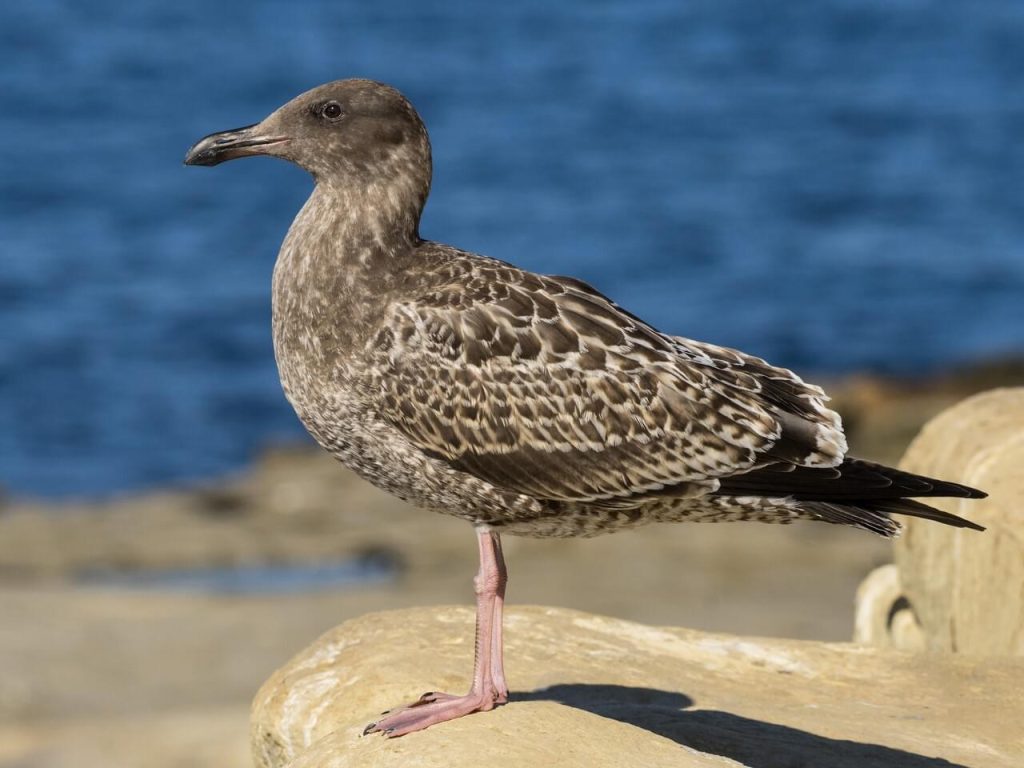
Above are 2 different gull species in their juvenile plumage. One is a Western Gull, and another is the Herring Gull. Without experience identifying gulls based on shape, it would be very hard to tell them apart. Even with that experience, it would be hard! Now imagine they have been beached and out in the elements for weeks. Try and guess which is which! (One is a Western Gull and one is a Herring Gull; Answers are at the bottom.)
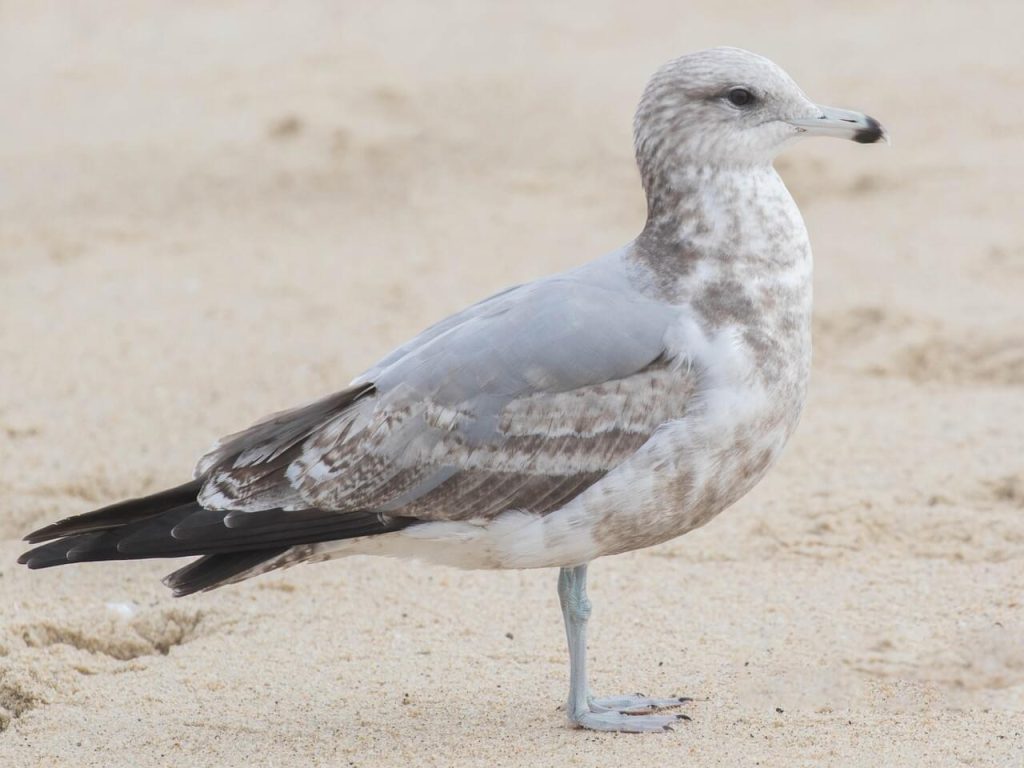
The two gulls above are different (but common) species, both in their second winter and sub-adult/immature plumage. Since they are older, they have more defining characteristics than they would have had the previous year. Without any options, take a guess on what 2 species!
All of this helps explain why “Large Immature Gull” is such a common find in COASST surveys. They are many species lumped together. Plus being young is hard! They are learning how to survive and sometimes don’t make it.
Large gull’s long transition to adulthood and shared ancestry means that they all look frustratingly similar. But even when we can’t tell exactly which species we’re looking at, each LIGU recorded is still valuable information to establish and maintain a baseline of bird mortality.
- Species in the first image group – Left: Herring Gull, Right: Western Gull
- Species in the second image group – Left: California Gull, Right Western Gull
Didn’t get the answers right? That’s why we lump these species into the bigger group of LIGUs!